




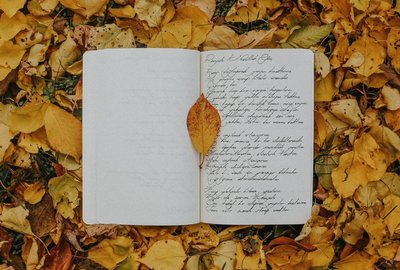


Finding Your Voice as a Writer: Why Imitation Is Not the Enemy
Creative Writing | September 22, 2026

Every writer has heard the advice: find your voice. It sounds simple, even poetic. But what does it actually mean? And how do you find something that feels like it should already be yours? The truth is that voice is not a hidden treasure waiting to be unearthed. It is something you build, slowly and often unconsciously, by writing through your influences until they become something new.
Aspirational writers often worry that imitating their favorite authors is a form of cheating. It is not. Every artist begins as a student. Painters copy the masters. Musicians play covers before they write their own songs. Writers are no different. Imitation is not the opposite of originality. It is the first step toward it.
Why Imitation Is Part of the Process
When you imitate a writer you admire, you are not stealing their voice. You are borrowing their tools. You are learning how they construct a sentence, how they pace a scene, how they use dialogue to reveal character. By writing in their style, you internalize those techniques until they become part of your own instincts.
The key is to imitate widely, not narrowly. If you only copy one writer, you will sound like a pale version of them. But if you imitate ten writers — a poet, a novelist, a essayist, a screenwriter — you will begin to blend their influences into something that no longer belongs to any of them. That blend is the beginning of your voice.
Try this exercise: write a paragraph in the style of a writer you love. Then write the same paragraph in the style of a writer who is completely different. Then write it in your own natural style. Compare the three. Notice what you kept, what you discarded, and what surprised you. Your voice is often hiding in the spaces between your influences.
Voice Is a Practice, Not a Destination
One of the most freeing realizations for a writer is that voice is not fixed. It changes as you change. The voice you have at twenty-five is not the voice you will have at forty. The voice you use for a poem is not the voice you use for a novel. Voice is not a single, permanent thing. It is a range, a palette, a way of moving through language that evolves with every piece you write.
This means you do not have to wait until you "find" your voice before you start writing. You find it by writing. You find it by writing badly, by writing honestly, by writing when you do not feel like it. You find it by reading your work aloud and noticing what sounds like you and what sounds like someone else.
The writers with the most distinctive voices are not the ones who tried hardest to be original. They are the ones who wrote the most, read the most, and paid the closest attention to what moved them. Voice is not a destination. It is the sound of your attention, sharpened over time.
So write like your heroes. Write like your enemies. Write like no one is watching. And slowly, without meaning to, you will start to sound like yourself.
-

-

-
From Cliché to Craft: How to Write About Love Without Sounding Like a Greeting Card
Sep 16, 2026Writing Craft


Words Meadow

Discover how flash fiction and micro-stories can sharpen your writing and teach you the power of restraint.